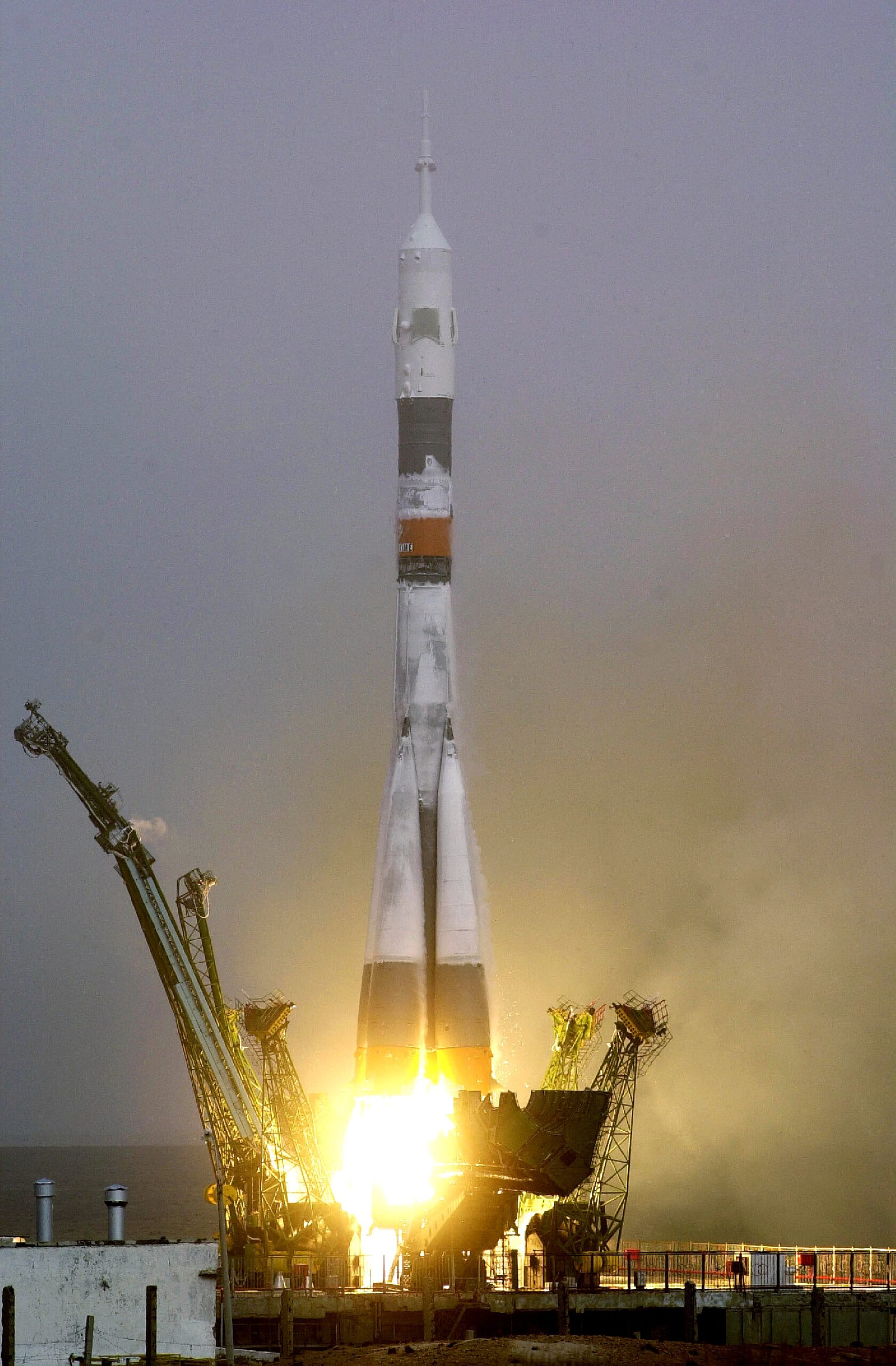
On October 31, 2000, Soyuz TM-31 launched from Baikonur Cosmodrome carrying the first long-duration crew to the International Space Station — American astronaut William Shepherd and Russian cosmonauts Yuri Gidzenko and Sergei Krikalev. The crew docked two days later, on November 2, and Shepherd took over as commander of what became known as Expedition 1, the station’s first resident crew.
The launch mattered less for the rocket itself (a well-proven Soyuz-U) than for what it started: continuous human presence in low Earth orbit. From that moment on, the ISS has never been unoccupied, a streak that has now run for over 25 years and counting through dozens of rotating crews from multiple countries and space agencies. It’s one of the longest-running cooperative technical projects in history, built on infrastructure, life support, and docking systems that had to work essentially without interruption for decades.
Expedition 1’s stay lasted about four and a half months, ending when the crew returned via the Space Shuttle in March 2001. But the mission they kicked off — a permanently crewed outpost in space, assembled piece by piece from modules launched by multiple nations — is still running today, a reminder that some of the biggest tech milestones are measured less in a single launch than in everything that kept working afterward.
Source: Wikipedia, RussianSpaceWeb.com
Daily Tech History is a running series looking back at notable moments in technology on this date.
Leave a Reply
You must be logged in to post a comment.