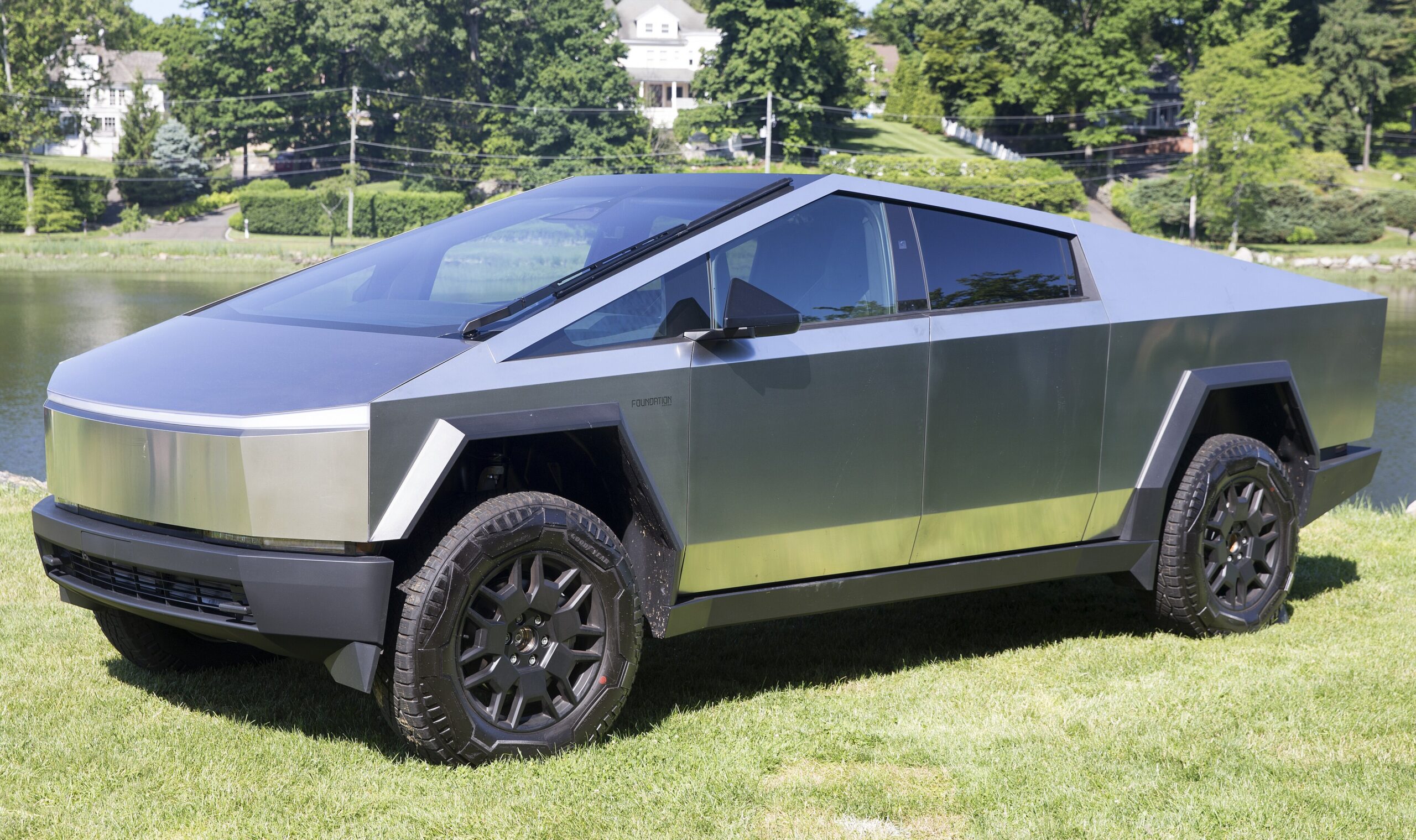
On November 21, 2019, Elon Musk stood on a stage at Tesla’s design studio in Hawthorne, California, and pulled the cover off the Cybertruck — an angular, stainless-steel pickup that looked like nothing else on the road. The reveal is probably best remembered for what went wrong: to prove the truck’s “armor glass” windows were unbreakable, a Tesla designer threw a metal ball at the driver’s-side window, and it cracked. He tried again on the rear window. It cracked too. Musk, visibly rattled, pressed on with the presentation anyway.
Despite the stumble, the event did what it was supposed to do — it got people talking. The Cybertruck’s slab-sided, origami-like design was a deliberate break from decades of pickup truck convention, built around a stainless-steel exoskeleton instead of a traditional body-on-frame structure. Tesla claimed towing capacity over 14,000 pounds and a starting price of $39,900, undercutting established gas-powered trucks from Ford and Chevy. Reservations poured in within days, even though the truck wouldn’t actually reach customer driveways until late 2023 — four years after that shaky stage demo.
Also on this day: November 21 marks the anniversary of a much quieter but arguably more consequential milestone — the first permanent physical link of the ARPANET, the US government research network that would eventually grow into the modern internet, was established between UCLA and the Stanford Research Institute in 1969.
Source: Engadget
Daily Tech History is a running series looking back at notable moments in technology on this date.
Leave a Reply
You must be logged in to post a comment.