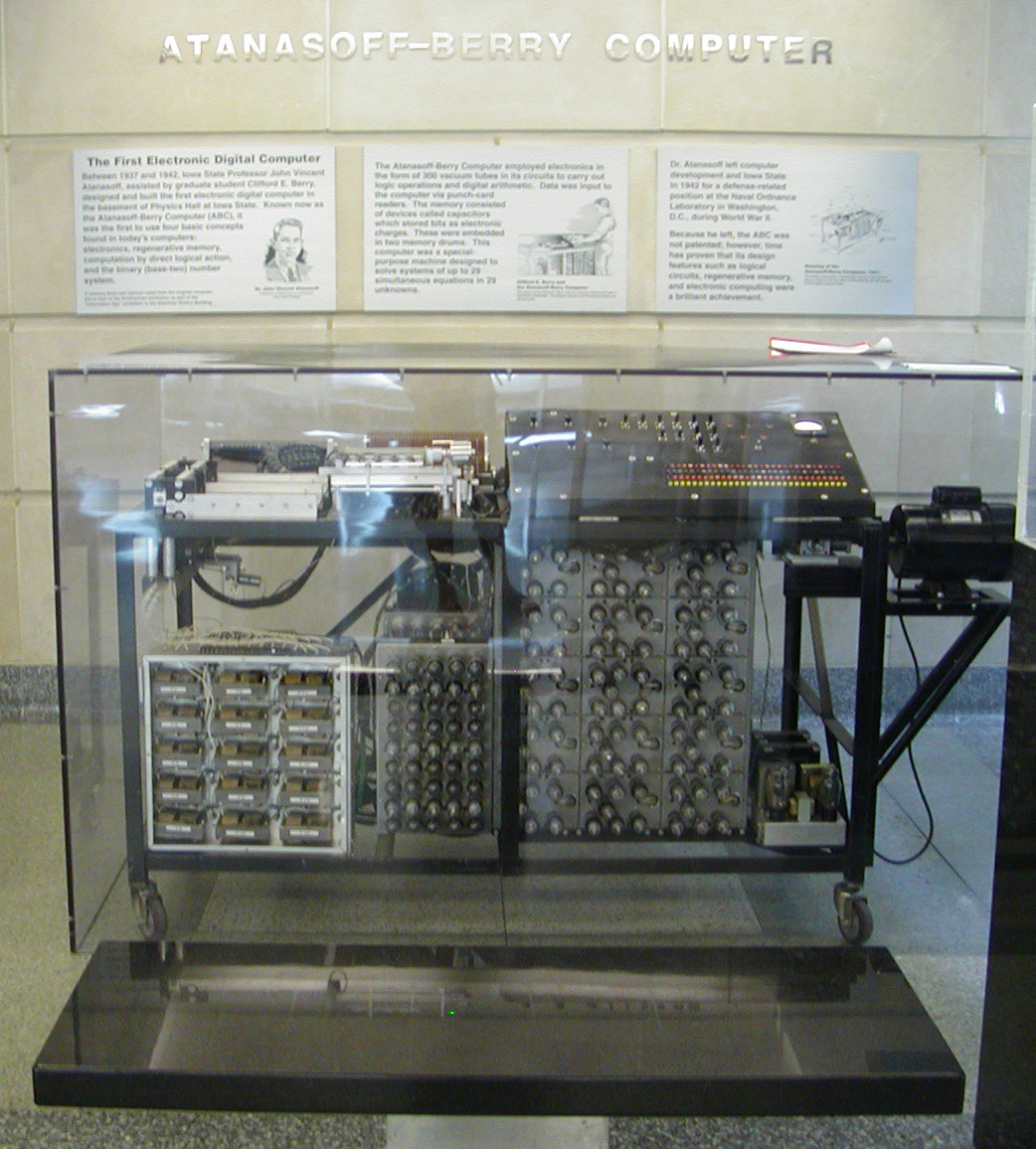
On October 19, 1973, a federal judge ruled that the ENIAC patent was invalid, and that credit for inventing the electronic digital computer belonged not to ENIAC’s creators, John Mauchly and J. Presper Eckert, but to a lesser-known Iowa State physics professor named John Vincent Atanasoff.
The ruling came at the end of a sprawling six-year legal fight, Honeywell v. Sperry Rand, over who controlled the rights to the computer patent and the licensing fees that came with it. Judge Earl R. Larson found that Mauchly had visited Atanasoff in 1941 and seen his prototype, the Atanasoff-Berry Computer, before ENIAC was built, and that Mauchly and Eckert “did not themselves first invent the automatic electronic digital computer, but instead derived that subject matter from” Atanasoff. With the patent thrown out, the core concept of the electronic digital computer effectively entered the public domain.
The decision didn’t settle the historical debate so cleanly as the courtroom verdict suggests. Atanasoff’s machine was never fully operational and couldn’t be reprogrammed for different problems the way ENIAC could, so many historians still credit ENIAC as the first general-purpose electronic computer in practice, even while crediting Atanasoff’s earlier work as a key conceptual influence. Either way, the ruling permanently complicated the simple story of “who invented the computer,” and it’s a big part of why Atanasoff’s name is now attached to computing history alongside ENIAC’s more famous inventors.
Source: Wikipedia: Honeywell, Inc. v. Sperry Rand Corp., Computer History Museum: This Day in History
Daily Tech History is a running series looking back at notable moments in technology on this date.
Leave a Reply
You must be logged in to post a comment.