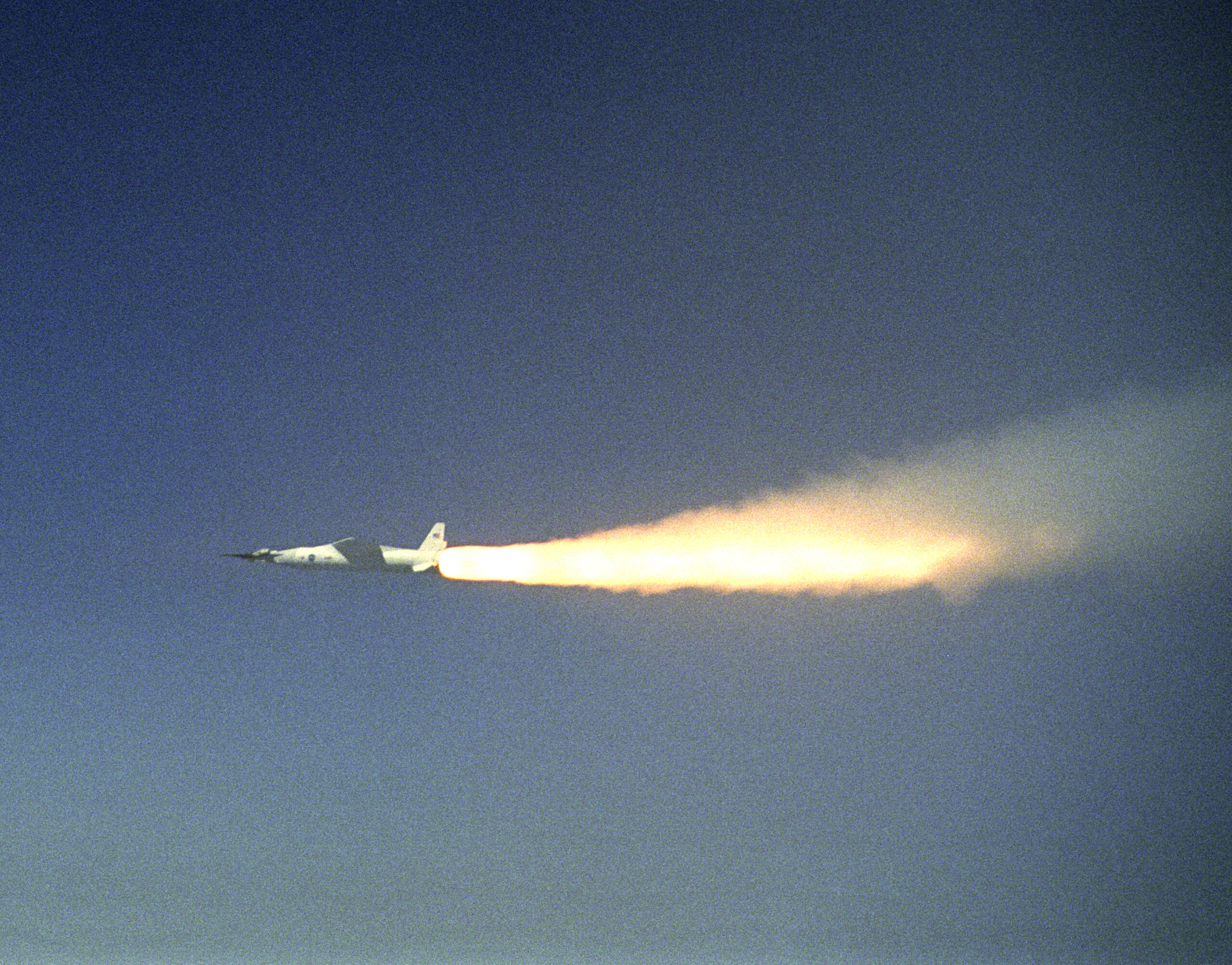
On November 16, 2004, NASA’s unmanned X-43A research aircraft reached Mach 9.6 — roughly 7,000 mph — setting a world speed record for an air-breathing aircraft that still stands today. The tiny, 12-foot vehicle was carried aloft under a NASA B-52B launched from what is now Armstrong Flight Research Center in California, released at about 40,000 feet, and then boosted to test altitude and speed by a Pegasus rocket. Once free, its scramjet engine lit and ran on its own for about ten seconds at roughly 110,000 feet before the vehicle glided for about ten more minutes and intentionally crashed into the Pacific Ocean roughly 850 miles off the California coast.
That brief ten-second burn mattered far more than its length suggests. Unlike a conventional jet or rocket, a scramjet (“supersonic combustion ramjet”) has no moving parts to compress incoming air — it relies entirely on the vehicle’s own hypersonic speed to force air into the combustion chamber, which makes it far lighter and more fuel-efficient than rocket propulsion for sustained high-speed flight. The X-43A’s result, later certified by Guinness World Records, more than doubled the previous air-breathing speed mark held by the SR-71 Blackbird (around Mach 3.3). It was the third and final flight of NASA’s Hyper-X program, following an earlier, slower success in March 2004, and no scramjet test flight has beaten its speed since.
Source: NASA — X-43A
Daily Tech History is a running series looking back at notable moments in technology on this date.
Leave a Reply
You must be logged in to post a comment.