Internet History

Daily Tech History: September 3, 1995 — eBay Is Born as “AuctionWeb”

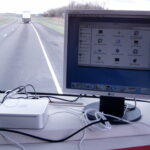
A vintage CRT computer monitor, evoking the mid-1990s era when eBay launched as AuctionWeb

On September 3, 1995, programmer Pierre Omidyar launched a scrappy little auction site out of his San Jose apartment called AuctionWeb — the site that would eventually become eBay. It was one of several experimental pages on Omidyar’s personal website, built over a Labor Day weekend as a side project to test whether a fair, open marketplace could work online. The very first item listed and sold was, fittingly, something nobody actually needed: a broken laser pointer, which went for $14.83. When Omidyar reached out to make sure the winning bidder understood the pointer didn’t work, he got a reply that has become tech folklore: “I’m a collector of broken laser pointers.”

What made AuctionWeb different wasn’t the idea of an auction — it was the feedback system. Letting buyers and sellers rate each other gave strangers a reason to trust one another with money, sight unseen, which turned out to be the missing piece for consumer-to-consumer commerce on the internet. The site made $1,000 in its first month, more than enough to cover Omidyar’s hosting bill, and kept climbing from there. It wasn’t renamed eBay until 1997 — a shortened nod to Omidyar’s consulting firm, Echo Bay Technology Group — but the DNA of the marketplace, strangers trading directly with strangers, was there from day one.

Also worth noting on this date: September 3, 1996 saw the public launch of Hotmail, one of the first free webmail services, which helped normalize the idea of checking your email from any browser rather than a single home computer.

Source: Wikipedia — eBay

Daily Tech History is a running series looking back at notable moments in technology on this date.

Daily Tech History: September 2, 1993 — W3Catalog, the Web’s First Search Engine, Goes Live

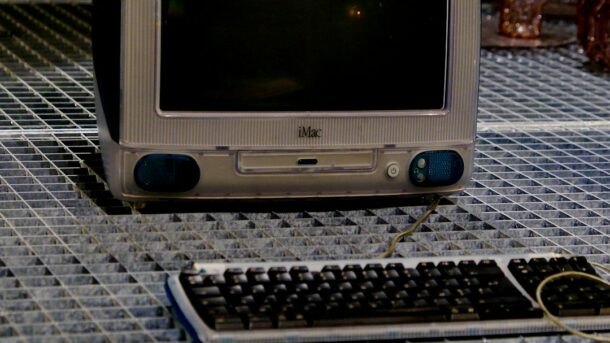
A vintage iMac computer from the early web era

On September 2, 1993, Oscar Nierstrasz at the University of Geneva launched W3Catalog, widely considered the first search engine for the World Wide Web. This was still the web’s very early days, barely two years after Tim Berners-Lee had put the first website online, and there was no Google, no Yahoo, not even a way to search the growing pile of pages beyond browsing hand-curated lists.

W3Catalog’s approach was clever rather than technically heroic: instead of crawling the web itself (a technique that didn’t really exist yet), it took several already-popular, manually maintained directories of web resources, mirrored them, and reformatted their entries into one searchable database. A Perl-based front end, built as an extension to an early web server since CGI scripting didn’t exist yet either, let visitors actually query that combined list. It wasn’t glamorous, but it worked, and it proved that “searching the web” could be a standalone service rather than something users did by clicking through bookmark pages. W3Catalog stayed online until 1996, by which point crawler-based engines like WebCrawler and Lycos had made its approach obsolete.

Also on this day: September 2, 1969 marked the very first ARPANET equipment installation at UCLA, the network that would eventually grow into the internet W3Catalog was built to search.

Source: Wikipedia, The History of the Web

Daily Tech History is a running series looking back at notable moments in technology on this date.

Daily Tech History: August 30, 1969 — The First IMP Arrives at UCLA, Launching the ARPANET

A rack of networking servers, evoking the early network hardware of the ARPANET era

On August 30, 1969, the very first piece of internet hardware landed at UCLA. Bolt Beranek and Newman (BBN) shipped the first Interface Message Processor — a modified Honeywell DDP-516 minicomputer with a mere 12K of memory — to Leonard Kleinrock’s Network Measurements Center. It arrived two days ahead of schedule, and a small team of graduate students, including Vinton Cerf, Steve Crocker, and Jon Postel, got to work installing it. That box became the first node of the ARPANET, the Pentagon-funded research network that would eventually grow into the internet we use today.

The IMP’s job was deceptively simple but hugely consequential: it acted as a dedicated gateway, taking data from a host computer and breaking it into packets to send across the network, laying the groundwork for the packet-switching approach that still underpins how data moves online. A second IMP reached Stanford Research Institute about a month later, and on October 29, 1969, the two machines exchanged the first message ever sent between networked computers — an attempted “LOGIN” that crashed after the first two letters, “LO,” were transmitted. Modest beginnings for what became a global network connecting billions of devices.

Also notable on this day: August 30, 1907 is the birthday of John Mauchly, the physicist who, with J. Presper Eckert, built ENIAC — the first large-scale electronic computer — a couple of decades before that first IMP ever booted up.

Source: This Day in Tech History

Daily Tech History is a running series looking back at notable moments in technology on this date.