Mike Williams

Daily Tech History: September 6, 2012 — Facebook Officially Closes the Instagram Deal

Person taking a photo with a smartphone, evoking mobile photo-sharing apps like Instagram

On September 6, 2012, Facebook officially closed its acquisition of Instagram, turning a deal first struck in a late-night handshake five months earlier into reality. The purchase was announced back in April 2012 at roughly $1 billion, split between cash and Facebook stock, but by the time the paperwork was finalized the value had slipped to somewhere around $736 million — Facebook’s own stock had taken a beating since its bumpy IPO that May, and a big chunk of the deal was paid in shares.

At the time, Instagram was a two-year-old startup with a headcount you could count on two hands and zero revenue, which made a billion-dollar price tag look reckless to a lot of observers. It didn’t look that way for long. Instagram went on to become one of the most valuable acquisitions in tech history, now anchoring a massive share of Meta’s advertising business and counting well over a billion users worldwide. Closing the deal also meant clearing regulatory review from the FTC and California’s Department of Corporations, both of which signed off in the weeks beforehand.

Also notable: Instagram marked the closing by announcing it had just crossed 5 billion photos shared on the platform — a number the app now blows past in a single day.

Source: TechCrunch

Daily Tech History is a running series looking back at notable moments in technology on this date.

Daily Tech History: September 5, 1977 — Voyager 1 Launches on Its Grand Tour

Artist's rendering of a deep space probe, evoking the Voyager 1 spacecraft

On September 5, 1977, NASA launched Voyager 1 from Cape Canaveral atop a Titan IIIE-Centaur rocket, sending the spacecraft on a mission to fly past Jupiter and Saturn. Oddly enough, Voyager 1 lifted off two weeks after its twin, Voyager 2, but its faster trajectory let it overtake its sibling by mid-December of that same year — a reminder that in space travel, launch order doesn’t always decide who arrives first.

The probe delivered on its original assignment and then some, spotting two previously unknown Jovian moons and a faint ring around Jupiter, then turning up five new moons and a distinct ring at Saturn. But Voyager 1’s real legacy is what happened after the planetary flybys ended. Rather than being switched off, it kept flying outward, and on February 17, 1998, it passed Pioneer 10 to become the most distant human-made object in existence. In August 2012, it pushed through the heliopause and became the first spacecraft to reach interstellar space, crossing out of the bubble of charged particles the Sun blows around our solar system.

Nearly five decades later, Voyager 1 is still checking in. Now more than 164 astronomical units from Earth (over 15 billion miles), it communicates with NASA’s Deep Space Network using a handful of surviving instruments, after engineers have carefully powered down others to stretch its dwindling energy supply for as long as possible. It’s a strange kind of longevity for 1970s-era hardware: the plutonium is fading, but the signal keeps coming.

Also worth noting: Voyager 1’s twin, Voyager 2, gets its own turn in this series — it launched August 20, 1977, and remains the only spacecraft to have visited all four giant planets.

Source: NASA Science — Voyager 1

Daily Tech History is a running series looking back at notable moments in technology on this date.

Daily Tech History: September 4, 1998 — Google Is Officially Incorporated

Google's headquarters building with the company's colorful logo

On September 4, 1998, Larry Page and Sergey Brin filed the paperwork to incorporate Google Inc., turning a Stanford PhD side project into a company. The two had met a few years earlier when Brin, already a grad student, gave campus tours to prospective students like Page. Their shared interest in extracting patterns from huge, messy datasets led them to a search engine they first called BackRub, built around the idea of ranking web pages by how many other pages linked to them.

By 1997 they’d renamed the project Google, a nod to “googol,” the mathematical term for a 1 followed by 100 zeros — a fittingly oversized name for a company whose stated mission was to organize all of the world’s information. The incorporation in September 1998 made it official, and the fledgling company set up shop in a Menlo Park garage. It didn’t take long for the outside world to notice: by December of that same year, PC Magazine had already named Google one of its “Top 100 Web Sites” for 1998, a remarkably fast turnaround for a company barely three months old.

What started as two grad students’ research project became the dominant way most of the world finds information online, and eventually the anchor of Alphabet, one of the largest companies on the planet. It’s a reminder that some of tech’s biggest empires started as unglamorous, unfunded experiments in a university lab.

Also on this day: September 4 has a habit of showing up in tech history — in 1888, George Eastman registered the “Kodak” trademark and patented his roll-film camera, kicking off the era of consumer photography.

Source: EDN

Daily Tech History is a running series looking back at notable moments in technology on this date.

Daily Tech History: September 3, 1995 — eBay Is Born as “AuctionWeb”

A vintage CRT computer monitor, evoking the mid-1990s era when eBay launched as AuctionWeb

On September 3, 1995, programmer Pierre Omidyar launched a scrappy little auction site out of his San Jose apartment called AuctionWeb — the site that would eventually become eBay. It was one of several experimental pages on Omidyar’s personal website, built over a Labor Day weekend as a side project to test whether a fair, open marketplace could work online. The very first item listed and sold was, fittingly, something nobody actually needed: a broken laser pointer, which went for $14.83. When Omidyar reached out to make sure the winning bidder understood the pointer didn’t work, he got a reply that has become tech folklore: “I’m a collector of broken laser pointers.”

What made AuctionWeb different wasn’t the idea of an auction — it was the feedback system. Letting buyers and sellers rate each other gave strangers a reason to trust one another with money, sight unseen, which turned out to be the missing piece for consumer-to-consumer commerce on the internet. The site made $1,000 in its first month, more than enough to cover Omidyar’s hosting bill, and kept climbing from there. It wasn’t renamed eBay until 1997 — a shortened nod to Omidyar’s consulting firm, Echo Bay Technology Group — but the DNA of the marketplace, strangers trading directly with strangers, was there from day one.

Also worth noting on this date: September 3, 1996 saw the public launch of Hotmail, one of the first free webmail services, which helped normalize the idea of checking your email from any browser rather than a single home computer.

Source: Wikipedia — eBay

Daily Tech History is a running series looking back at notable moments in technology on this date.

Daily Tech History: September 2, 1936 — Andrew Grove, the Man Who Built Intel, Is Born

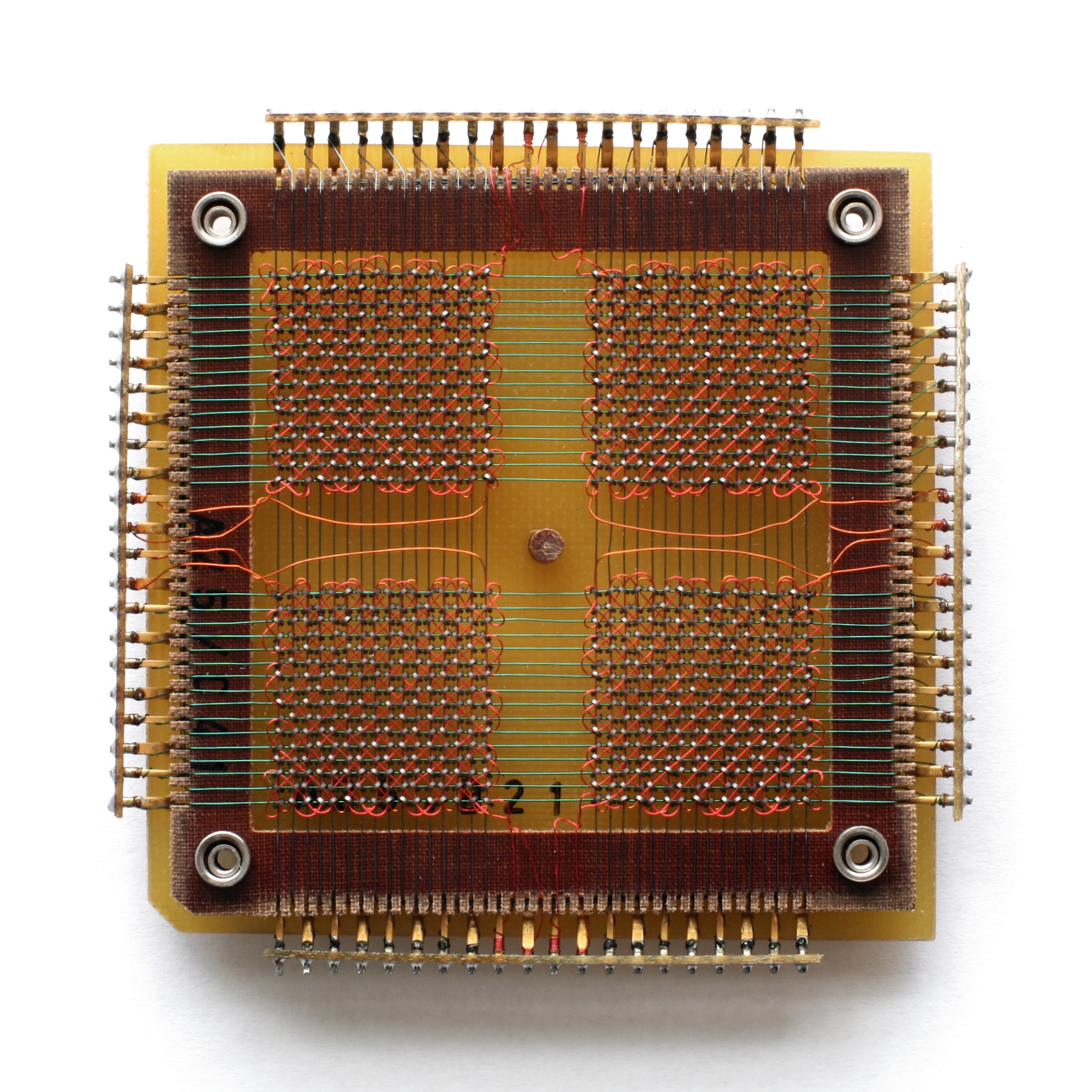
Macro photograph of a black semiconductor circuit board, representing Intel's chip technology

On September 2, 1936, Andrew Grove was born in Budapest, Hungary — a birth that, decades later, would matter enormously to the technology industry. Born Gróf András István, he survived Nazi occupation as a child and fled Hungary alone at age 20 during the 1956 revolution, arriving in the United States with almost nothing. Within a decade he’d become one of Silicon Valley’s most consequential executives.

Grove joined Intel on the day it was founded in 1968 as employee number three, working alongside legends Robert Noyce and Gordon Moore. He became CEO in 1987 and spent the next decade transforming Intel from a struggling memory-chip maker into the dominant force behind the personal computer’s processor. Under his leadership, Intel’s market value grew from roughly $4 billion to $197 billion. Grove’s management philosophy, distilled in his famous line “Only the paranoid survive,” pushed the idea that companies must constantly watch for “strategic inflection points” — moments of fundamental change that can make or break a business if leaders don’t act fast enough. He’s also credited with popularizing the OKR (Objectives and Key Results) goal-setting framework, which Intel used internally and which later became a cornerstone of how Google — and countless startups since — sets and tracks goals.

Also worth noting: Grove’s influence was recognized well beyond the chip industry. In 1997, Time magazine named him Person of the Year, crediting him as “the person most responsible for the amazing growth in the power and the innovative potential of microchips.” It’s a reminder that the hardware powering every device we use today has a very human history behind it.

Source: Wikipedia — Andrew Grove

Daily Tech History is a running series looking back at notable moments in technology on this date.

Daily Tech History: September 2, 1993 — W3Catalog, the Web’s First Search Engine, Goes Live

A vintage iMac computer from the early web era

On September 2, 1993, Oscar Nierstrasz at the University of Geneva launched W3Catalog, widely considered the first search engine for the World Wide Web. This was still the web’s very early days, barely two years after Tim Berners-Lee had put the first website online, and there was no Google, no Yahoo, not even a way to search the growing pile of pages beyond browsing hand-curated lists.

W3Catalog’s approach was clever rather than technically heroic: instead of crawling the web itself (a technique that didn’t really exist yet), it took several already-popular, manually maintained directories of web resources, mirrored them, and reformatted their entries into one searchable database. A Perl-based front end, built as an extension to an early web server since CGI scripting didn’t exist yet either, let visitors actually query that combined list. It wasn’t glamorous, but it worked, and it proved that “searching the web” could be a standalone service rather than something users did by clicking through bookmark pages. W3Catalog stayed online until 1996, by which point crawler-based engines like WebCrawler and Lycos had made its approach obsolete.

Also on this day: September 2, 1969 marked the very first ARPANET equipment installation at UCLA, the network that would eventually grow into the internet W3Catalog was built to search.

Source: Wikipedia, The History of the Web

Daily Tech History is a running series looking back at notable moments in technology on this date.

Daily Tech History: September 1, 1979 — Pioneer 11 Becomes First Spacecraft to Fly By Saturn

The planet Saturn and its rings as seen from space

On September 1, 1979, NASA’s Pioneer 11 spacecraft became the first human-made object to fly past Saturn, skimming within about 13,000 miles of the planet’s cloud tops at roughly 71,000 miles per hour. Launched all the way back in 1973 primarily to scout a safe path through the outer solar system for the more sophisticated Voyager probes that would follow, Pioneer 11 had already buzzed Jupiter in 1974 before spending years coasting toward its Saturn encounter.

The flyby wasn’t just a first-contact milestone, it delivered real science. Pioneer 11 detected Saturn’s bow shock the day before closest approach, giving scientists their first solid evidence of the planet’s magnetic field, and its instruments spotted a previously unknown ring (later named the F ring) along with two additional moons. Because Pioneer 11 was essentially flying blind through territory no one had mapped, its data on Saturn’s ring plane and radiation environment was critical for planning safe, close passes for Voyager 1 and Voyager 2 less than a year later. In a sense, this humble, golf-cart-speed probe took the risk so its more famous successors didn’t have to.

Also on this day: September 1, 1994 saw the Library of Congress launch an early “virtual library” initiative, one of the first major efforts by a national cultural institution to put its collections online, a small but telling sign of the internet’s shift from research curiosity to public infrastructure.

Source: NASA, EarthSky

Daily Tech History is a running series looking back at notable moments in technology on this date.

Daily Tech History: August 31, 1994 — Adobe Finalizes Its Merger With Aldus

Design books and paper layout samples, evoking early desktop publishing and page design

On August 31, 1994, Adobe Systems officially closed its acquisition of Aldus Corporation, the Seattle software company behind PageMaker — the program widely credited with kicking off desktop publishing a decade earlier. The deal, valued at roughly $446 million, brought PageMaker’s user base under Adobe’s roof and folded one of publishing software’s pioneering names into the company that made PostScript.

Aldus was founded in 1984 by Paul Brainerd, who is credited with coining the term “desktop publishing” itself. PageMaker, released in 1985, paired with Apple’s LaserWriter and Adobe’s PostScript language to let ordinary Macintosh users lay out newsletters and books the way only professional typesetters could before. That combination is often cited as the reason the early Mac found a real foothold in offices and print shops. By merging with Adobe a decade later, Aldus effectively handed its flagship product to the company that would eventually build a rival layout tool, InDesign, and retire PageMaker altogether in 2001.

The merger is a reminder that even category-defining software has a shelf life: PageMaker had already started losing ground to QuarkXPress by the time Adobe absorbed it, and it took Adobe five more years to ship a true successor. Still, the DNA of that original desktop publishing breakthrough lives on in InDesign, which remains a standard tool in publishing and design studios today.

Source: Wikipedia — Aldus Corporation, Day in Tech History

Daily Tech History is a running series looking back at notable moments in technology on this date.

Daily Tech History: August 30, 1969 — The First IMP Arrives at UCLA, Launching the ARPANET

A rack of networking servers, evoking the early network hardware of the ARPANET era

On August 30, 1969, the very first piece of internet hardware landed at UCLA. Bolt Beranek and Newman (BBN) shipped the first Interface Message Processor — a modified Honeywell DDP-516 minicomputer with a mere 12K of memory — to Leonard Kleinrock’s Network Measurements Center. It arrived two days ahead of schedule, and a small team of graduate students, including Vinton Cerf, Steve Crocker, and Jon Postel, got to work installing it. That box became the first node of the ARPANET, the Pentagon-funded research network that would eventually grow into the internet we use today.

The IMP’s job was deceptively simple but hugely consequential: it acted as a dedicated gateway, taking data from a host computer and breaking it into packets to send across the network, laying the groundwork for the packet-switching approach that still underpins how data moves online. A second IMP reached Stanford Research Institute about a month later, and on October 29, 1969, the two machines exchanged the first message ever sent between networked computers — an attempted “LOGIN” that crashed after the first two letters, “LO,” were transmitted. Modest beginnings for what became a global network connecting billions of devices.

Also notable on this day: August 30, 1907 is the birthday of John Mauchly, the physicist who, with J. Presper Eckert, built ENIAC — the first large-scale electronic computer — a couple of decades before that first IMP ever booted up.

Source: This Day in Tech History

Daily Tech History is a running series looking back at notable moments in technology on this date.

Daily Tech History: August 29, 1990 — The UK’s Computer Misuse Act Takes Effect

Vintage 1990s-era computer, evoking the era of the UK's Computer Misuse Act

On August 29, 1990, the United Kingdom’s Computer Misuse Act came into force, becoming one of the first laws anywhere in the world written specifically to criminalize hacking. It had received Royal Assent two months earlier, on June 29, but this was the day it actually took effect and started governing what counted as a computer crime.

The law existed because of an embarrassing gap earlier in the decade. In 1984, two hackers, Robert Schifreen and Stephen Gold, talked their way into British Telecom’s Prestel network — at one point even poking around in the private mailbox of Prince Philip, the Duke of Edinburgh. When they were eventually caught and prosecuted, the case (R v Gold & Schifreen) fell apart on appeal, because Britain simply had no law that treated unauthorized computer access as a crime; prosecutors had tried to stretch old forgery statutes to fit, and the House of Lords wasn’t buying it. Parliament responded with the Computer Misuse Act, which created three specific offenses: unauthorized access to computer material, unauthorized access with intent to commit a further crime, and unauthorized modification of computer material.

More than three decades later, the Act is still on the books and still the primary UK statute prosecutors reach for in hacking cases, though it’s been amended over the years and remains a point of debate — security researchers have long argued its broad wording makes it risky to do legitimate penetration testing or vulnerability disclosure without careful legal footing. Love it or criticize it, it set an early template that plenty of other countries’ computer crime laws would later echo.

Source: Wikipedia — Computer Misuse Act 1990 and Computer History Museum — This Day in History

Daily Tech History is a running series looking back at notable moments in technology on this date.