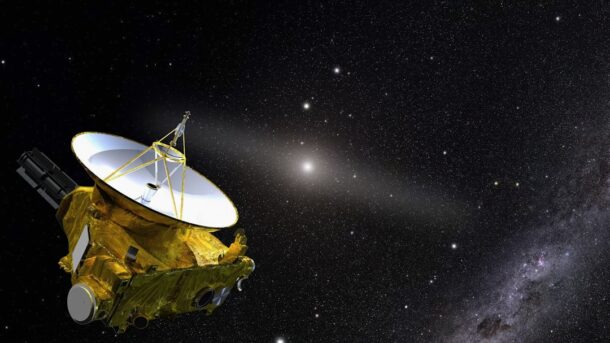
On September 5, 1977, NASA launched Voyager 1 from Cape Canaveral atop a Titan IIIE-Centaur rocket, sending the spacecraft on a mission to fly past Jupiter and Saturn. Oddly enough, Voyager 1 lifted off two weeks after its twin, Voyager 2, but its faster trajectory let it overtake its sibling by mid-December of that same year — a reminder that in space travel, launch order doesn’t always decide who arrives first.
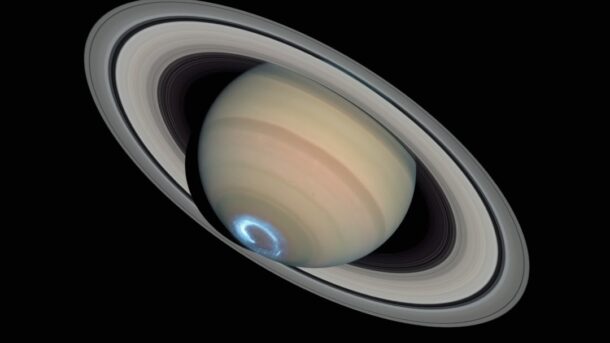
The probe delivered on its original assignment and then some, spotting two previously unknown Jovian moons and a faint ring around Jupiter, then turning up five new moons and a distinct ring at Saturn. But Voyager 1’s real legacy is what happened after the planetary flybys ended. Rather than being switched off, it kept flying outward, and on February 17, 1998, it passed Pioneer 10 to become the most distant human-made object in existence. In August 2012, it pushed through the heliopause and became the first spacecraft to reach interstellar space, crossing out of the bubble of charged particles the Sun blows around our solar system.
Nearly five decades later, Voyager 1 is still checking in. Now more than 164 astronomical units from Earth (over 15 billion miles), it communicates with NASA’s Deep Space Network using a handful of surviving instruments, after engineers have carefully powered down others to stretch its dwindling energy supply for as long as possible. It’s a strange kind of longevity for 1970s-era hardware: the plutonium is fading, but the signal keeps coming.
Also worth noting: Voyager 1’s twin, Voyager 2, gets its own turn in this series — it launched August 20, 1977, and remains the only spacecraft to have visited all four giant planets.
Source: NASA Science — Voyager 1
Daily Tech History is a running series looking back at notable moments in technology on this date.