search engines

Daily Tech History: September 4, 1998 — Google Is Officially Incorporated

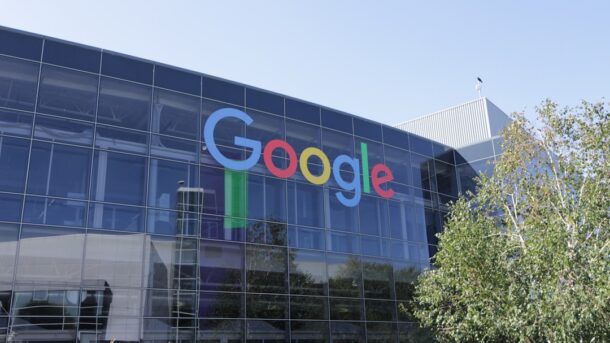
Google's headquarters building with the company's colorful logo

On September 4, 1998, Larry Page and Sergey Brin filed the paperwork to incorporate Google Inc., turning a Stanford PhD side project into a company. The two had met a few years earlier when Brin, already a grad student, gave campus tours to prospective students like Page. Their shared interest in extracting patterns from huge, messy datasets led them to a search engine they first called BackRub, built around the idea of ranking web pages by how many other pages linked to them.

By 1997 they’d renamed the project Google, a nod to “googol,” the mathematical term for a 1 followed by 100 zeros — a fittingly oversized name for a company whose stated mission was to organize all of the world’s information. The incorporation in September 1998 made it official, and the fledgling company set up shop in a Menlo Park garage. It didn’t take long for the outside world to notice: by December of that same year, PC Magazine had already named Google one of its “Top 100 Web Sites” for 1998, a remarkably fast turnaround for a company barely three months old.

What started as two grad students’ research project became the dominant way most of the world finds information online, and eventually the anchor of Alphabet, one of the largest companies on the planet. It’s a reminder that some of tech’s biggest empires started as unglamorous, unfunded experiments in a university lab.

Also on this day: September 4 has a habit of showing up in tech history — in 1888, George Eastman registered the “Kodak” trademark and patented his roll-film camera, kicking off the era of consumer photography.

Source: EDN

Daily Tech History is a running series looking back at notable moments in technology on this date.
Daily Tech History: September 2, 1993 — W3Catalog, the Web’s First Search Engine, Goes Live

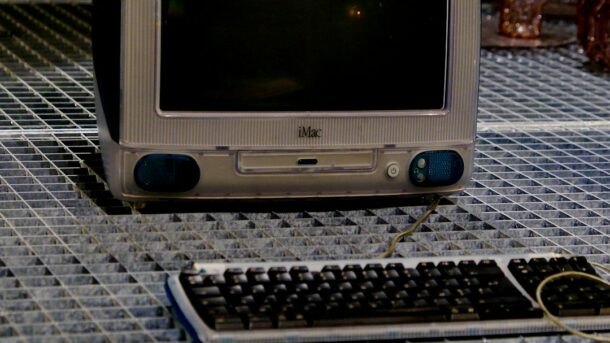
A vintage iMac computer from the early web era

On September 2, 1993, Oscar Nierstrasz at the University of Geneva launched W3Catalog, widely considered the first search engine for the World Wide Web. This was still the web’s very early days, barely two years after Tim Berners-Lee had put the first website online, and there was no Google, no Yahoo, not even a way to search the growing pile of pages beyond browsing hand-curated lists.

W3Catalog’s approach was clever rather than technically heroic: instead of crawling the web itself (a technique that didn’t really exist yet), it took several already-popular, manually maintained directories of web resources, mirrored them, and reformatted their entries into one searchable database. A Perl-based front end, built as an extension to an early web server since CGI scripting didn’t exist yet either, let visitors actually query that combined list. It wasn’t glamorous, but it worked, and it proved that “searching the web” could be a standalone service rather than something users did by clicking through bookmark pages. W3Catalog stayed online until 1996, by which point crawler-based engines like WebCrawler and Lycos had made its approach obsolete.

Also on this day: September 2, 1969 marked the very first ARPANET equipment installation at UCLA, the network that would eventually grow into the internet W3Catalog was built to search.

Source: Wikipedia, The History of the Web

Daily Tech History is a running series looking back at notable moments in technology on this date.