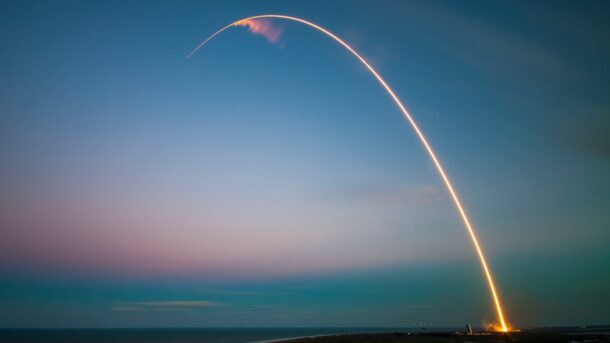
On August 20, 1977, NASA launched the Voyager 2 spacecraft from Cape Canaveral, Florida, atop a Titan IIIE-Centaur rocket, after a launch attempt troubled by a pair of computer glitches on the pad. Despite lifting off two weeks before its twin, Voyager 1, it was sent on a longer, more roundabout trajectory — one that would eventually make it the only spacecraft in history to visit all four outer planets: Jupiter, Saturn, Uranus, and Neptune.
Voyager 2’s instruments captured close-up imagery and data that reshaped our understanding of the outer solar system, from Jupiter’s turbulent atmosphere to the icy moons of Uranus and Neptune. In December 2018 it became only the second human-made object ever to cross into interstellar space, following Voyager 1. Nearly five decades after launch, the probe is still transmitting data from beyond the solar system, making it one of the longest continuously operating spacecraft ever built — a remarkable feat for hardware designed in the 1970s.
Also born on this day: John Carmack (1970), the programmer behind id Software’s breakthrough 3D graphics engines that powered games like Doom and Quake.
Source: NASA Science — Voyager Fact Sheet
Daily Tech History is a running series looking back at notable moments in technology on this date.