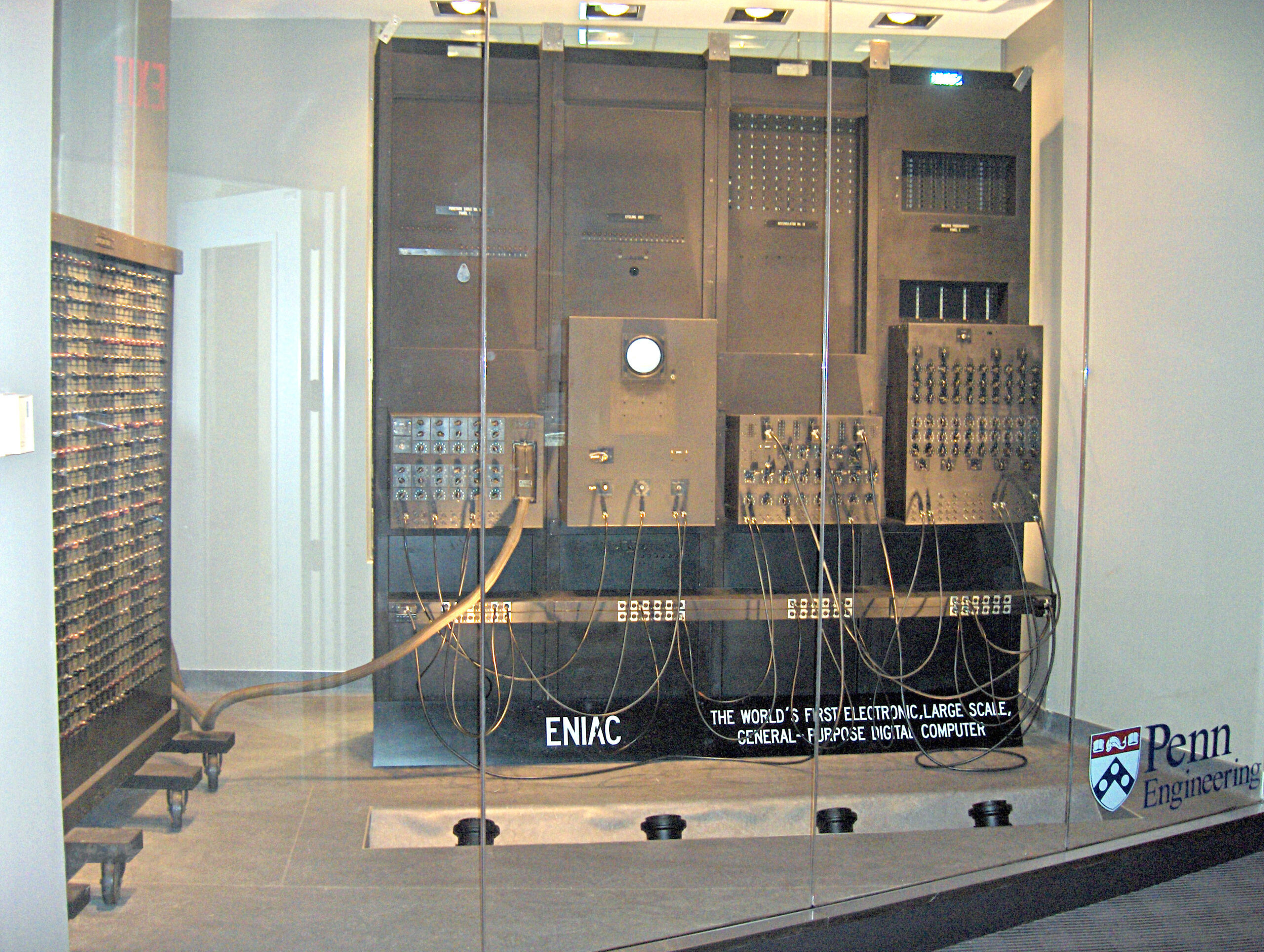
On October 2, 1955, the ENIAC — the machine widely credited as the first general-purpose electronic digital computer — was switched off for good. According to lab accounts, a lightning strike hit the facility earlier that day, and by 11:45 PM the power was cut and the room fell silent after more than eleven years of continuous operation.
ENIAC had been unveiled back in February 1946 at the University of Pennsylvania, built for the U.S. Army to calculate artillery firing tables. It was a beast by any standard: nearly 1,800 square feet of vacuum tubes, switches, and plugboards, capable of around 5,000 operations per second — roughly 1,000 times faster than the electromechanical calculators it replaced. It’s often said that in its working lifetime, ENIAC performed more raw arithmetic than the entire human race had completed by hand before 1945. After its retirement, the Army transferred the machine to the Smithsonian and several university collections, where pieces of it are still displayed today as a physical reminder of just how far computing has come from room-sized tube arrays to the device you’re probably reading this on.
ENIAC’s shutdown also marks a quiet handoff moment in computing history — by the mid-1950s, transistor-based machines were already being designed to replace exactly this kind of tube-heavy hardware, kicking off the steady march toward smaller, faster, and far more reliable computers.
Source: Computer History Museum, The National Museum of Computing
Daily Tech History is a running series looking back at notable moments in technology on this date.
Leave a Reply
You must be logged in to post a comment.